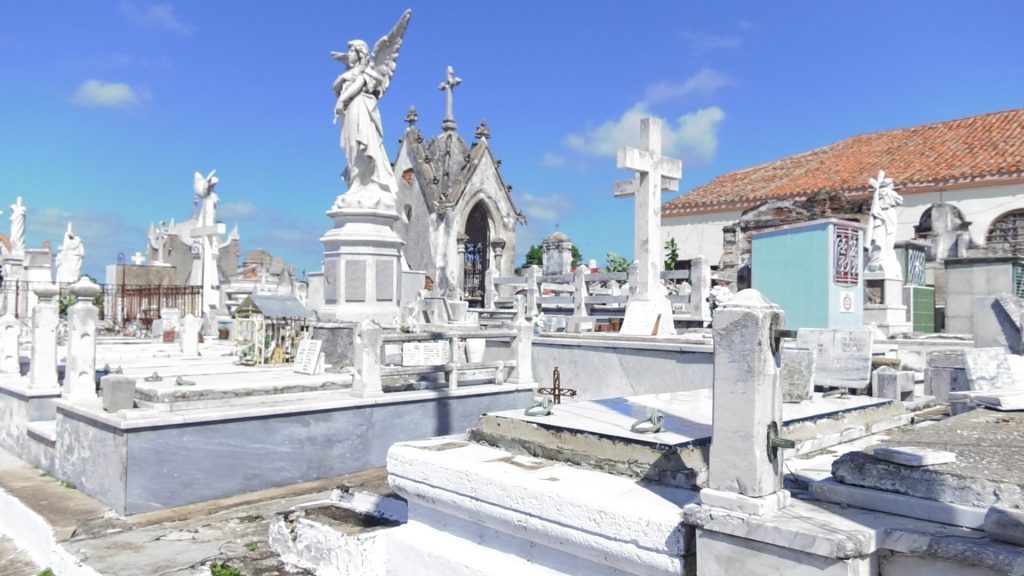
The General Cemetery of Camagüey has elements that distinguish it from other necropolises.
Among the oldest, it is the only one that still remains in use, and like none in Cuba, it has pantheons of four fronts. Unlike the other cemeteries in the country, it was not named after a patron saint, but responds to the name of the town, it is identified as Necropolis of Camagüey or General Cemetery of Camagüey.
206 years after its founding, the Office of the Historian of Camagüey city has the responsibility of restoring it in order to rescue historical, artistic and cultural values that it treasures.
Its restoration project dates from 2002 and begins to materialize in February 2019, beginning with the intervention of the vault of Salvador Cisneros Betancourt, due to the significance for Camagüey people.
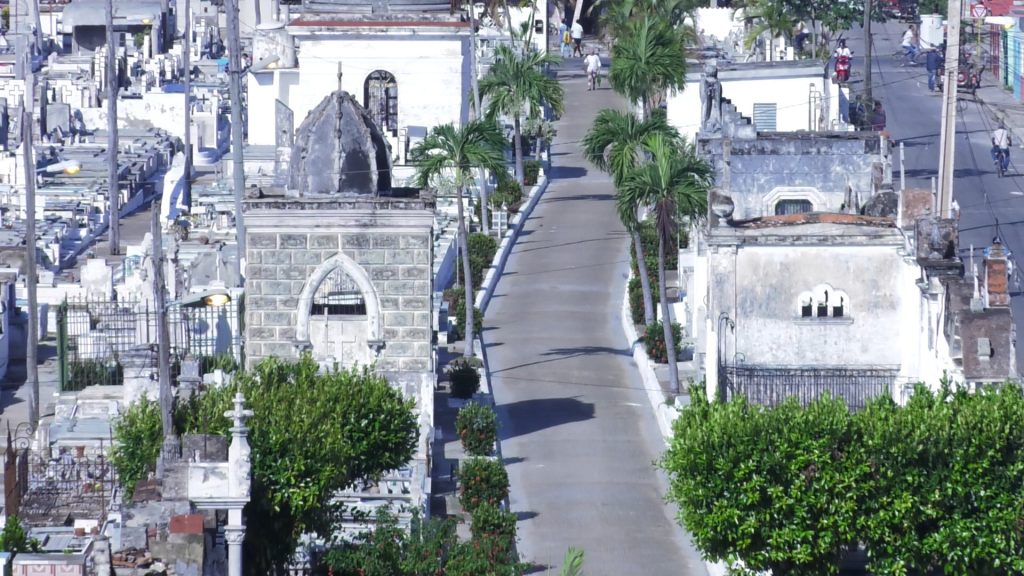
This was followed by the second section or main street, as it is known, due to its historical value. In this, rest the remains of personalities such as: Amalia Simoni, Vicentina de la Torre, Francisco Sánchez Betancourt and Juan Antonio Bravo (first president of the Assembly of People’s Power).
Not long after, in the fourth section, the pantheon of those fallen while defending our country was undertaken; it was finished on December 6th, 2019 for the 30th anniversary of the Tribute Operation.
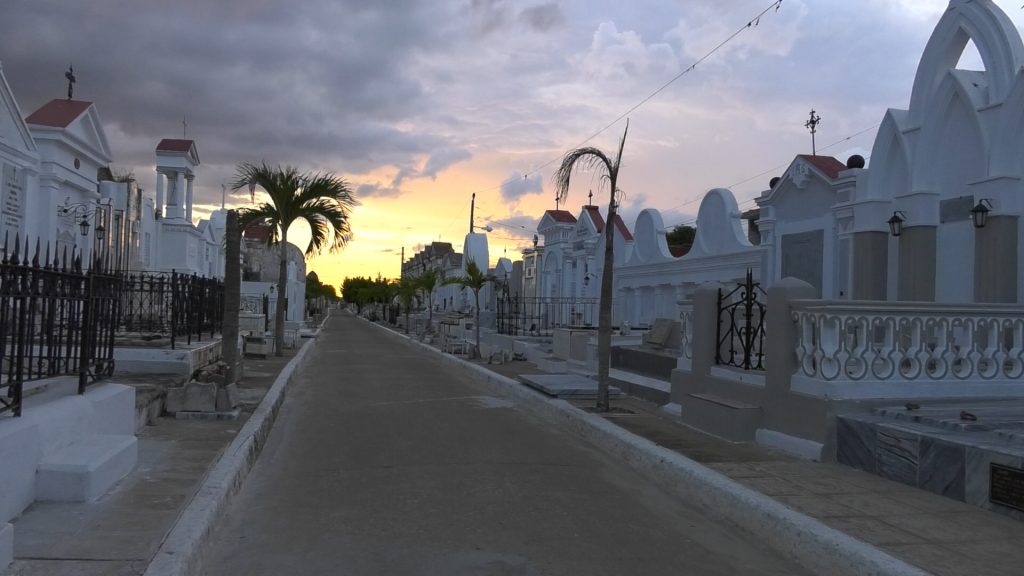
Nowadays, the third section or Los Ángeles Street is intervened, dedicated to important personalities in the history of Camagüey such as Carmen Zayas Bazán and Gaspar Betancourt Cisneros (El Lugareño).
This section includes the morgue or mortuary as it is also known. It was inaugurated on October 20th, 1887, as shown by a tombstone located on the wall. In its beginnings it consisted of two rooms, the first functioned as a waiting room and the second as an autopsy room.
This was working until about the 1980s, but due to the destruction caused by the lack of use and the passage of time, it changed its function and turned into a warehouse for construction materials, a function that it fulfills to this day.
But based on its high historical and patrimonial values, the Office of the Historian, already immersed in this process of restoring the cemetery, decides to intervene in this place to give it a change of use, which will become the Interpretation Center of the necropolis.
This open-air museum will create a space for Camagüey people to know about the cemetery, both its history and its heritage values, through the interaction of the Office’s own specialists with the public, through museological speeches.
Along with the museum tour, which includes the two rooms of the morgue, the future Interpretation Center; Trails such as the patriotic-historical one are projected, to gather the routes of the martyrs of 1868 and 1895, as well as paths referring to teachers, architects, doctors, historians, athletes, work heroes and other personalities that are not currently included in the historiographic study of the cemetery.
Many are the people who come together every day to make this project come true and provide the city with something essential, such as knowledge and the return to the vitality of the General Cemetery of Camagüey.
For this reason, to this space of permanent remembrance and tribute, we must go to pay tribute to so many people who preceded us and earned undeniable respect with their work. This is a claim that we make with the hope that the people of Camagüey: cultured, grateful and dignified, make this place their own and value it as expected.
Translated by: Aileen Álvarez García