A Nazi submarine was sunk about three miles from the Maternillo lighthouse, off Nuevitas Bay, in the north of the Cuban province of Camagüey.
The lighthouse is the second highest in Cuba and is at one of the ends of Sabinal Key, of the Sabana-Camagüey archipelago.
Did ii really sink?
Information navigates a rough sea of contradictions. The date of the event is unknown, and references to it only point to World War II.
Gunfire against a submarine on the surface
The merchant ship Dominus traveled almost every month to Tarafa, a port in Nuevitas Bay, and its crew members were well-known in the area.
An unforeseeable event got in the way of the boat.
On one of those trips, heading to Maternillo, a German submersible surfaced nearby and machine-gunned it, but the damages did not cause the shipwreck.
The response was forceful with a three-inch cannon, and the holes opened by the thick projectiles sent the enemy ship to the bottom of the sea.
An exceptional combat against a submarine on the surface.
The Dominus continued towards Nuevitas, where a popular party celebrated the feat of the accurate cannon shots.
There was no official confirmation about the action, and the fact remained only orally, with all the risks of speculation and misrepresentations.
Even so, not all truths are written and/or supported by official certifications. What is written does not eliminate the possibility of fabrications, even grossly premeditated ones; Nor is orality proof of the lack of truth.
German underwater war in America
The presence of Nazi submersibles in Cuban waters was part of an operation in which Germany sent 23 submarines to the Gulf of Mexico and the Caribbean. It included impacts, such as the sinking of seven Cuban merchant ships, with 77 deaths.
Among the events caused by that underwater war is the shipwreck of two ships off Nuevitas: the Mambi, from Cuba, and the Nickeline, from the United States of America; which were part of a convoy with military protection.
The Mambí, a former sailboat converted into a tanker, was divided into two parts by the chimney area, and in a few minutes reached the seabed.
Loaded with ammonia gas, the Nikeline took about 20 minutes to sink.
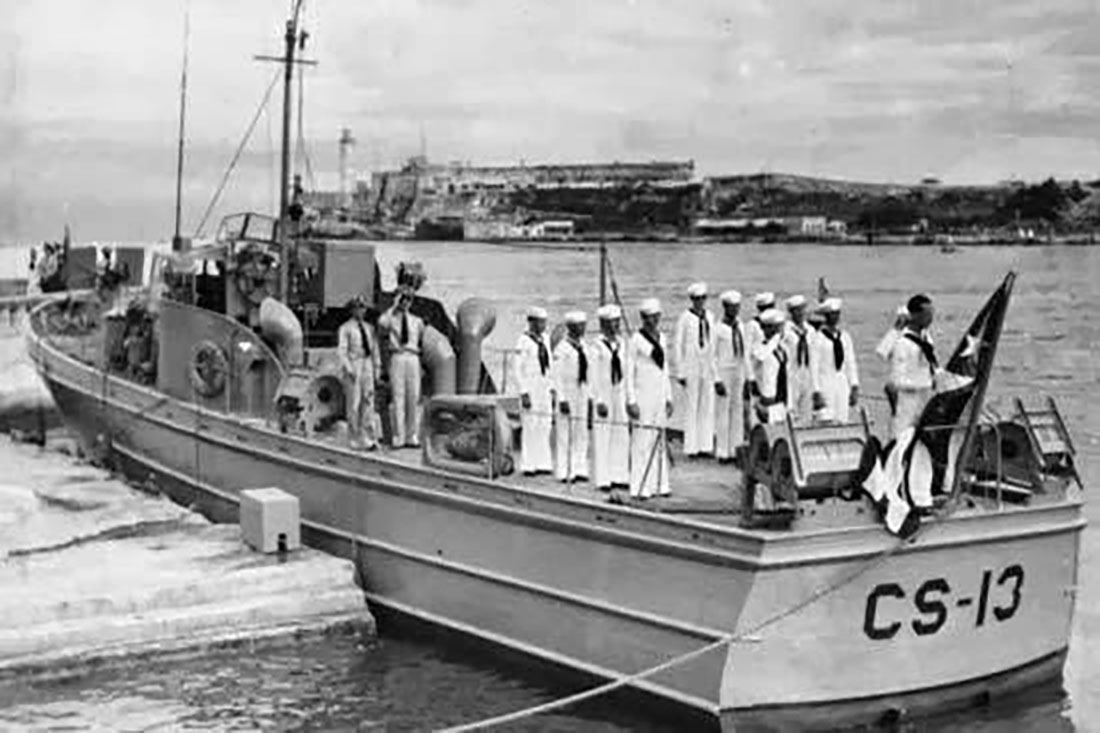
The sinking was caused by the submersible U-Boat 176, which was shot down a few days later in the west of the country by the Cuban submarine fighter CS 13.
The data in this regard is duly documented.
Cuba and Brazil were the only Latin American countries to sink submersibles in World War II.
Shots against reason
The combat between the Dominus and the Nazi ship is involved in a hurricane sea.
How is it that the submarine, with its remote sensing means, did not locate the ship and torpedo it and, on the contrary, ignored that advantage and surfaced to machine gun it?
This would have been the most logical thing, taking into account that the cargo ships were equipped with weapons or escorted by military ships to face contingencies of World War II.
Perhaps the cause could have been that the remote sensing equipment was disabled, but there were no technicians on board capable of repairing the malfunction? The answers have many questions and carry legendary nuances. It is a story overflowing with surrealism.
And the remains of the submersible?
Was a Nazi submarine really sunk off Nuevitas? Who can affirm it irreversibly? How will it be known?
Clarifying the enigma is costly: tracking the remains of the submersible by remote sensing. If that were done…will the physical traces of the sunken ship appear? Who knows! Because this is a shipwreck that has transcended history, immersed in an intense mist.
(Main sources consulted: “Hemingway en la cayería de Romano” y “Hemingway, ese desconocido”, by Enrique Cirules.
Translated by: Aileen Álvarez García