By: Oreidis Pimentel Pérez
The confluence of religions or religion, said in an abstract way, also has its day since 1950 and for more similarity with more familiar dates such as Mother’s or Father’s Day, it is also a moveable date, the third Sunday of January. This international designation, little known or publicized, had its genesis in the need for intercultural tolerance, since nothing divides human beings more than dogmas and fanaticism, both political and religious.
Paradoxically, the initiative for this International Day did not come from major, monotheistic and more generalized religions such as Christianity, Judaism or Islam, but from an almost unknown National Spiritual Assembly of the Bahai religion, in the United States, a Persian-influenced movement that advocated a peaceful coincidence date.

The imposition of one system over another, the conquest and creation of empires has had one of its fundamental weapons in religion, and ethnic cleansing still maintains the old marks of the Catholic-Protestant antagonisms within Christianity, Shiite-Sunni among Muslims, Christianity-Islamism and vice versa, Islamism-Hinduism and Judaism/Zionism-Islamism, just to name a few. In addition, a large part of the religions of the Third World, the aborigines of America and the Africans, have been invisibilities after the arrival of the “sword and the cross”, therefore new sociological and historical concepts have demonstrated the need to preserve these also called intangible assets.
From Cuba
In the Cuban case, the colonial vestiges did not make different manifestations disappear. If it could be thought that the aboriginal vanished in the nation, we would be forgetting that the original figure of Our Lady of Charity is made from a mixed dough of corn, indisputable evidence of an aboriginal origin manufacture, also that rituals of the Spiritism of Cordón have parallels in the areíto dance.

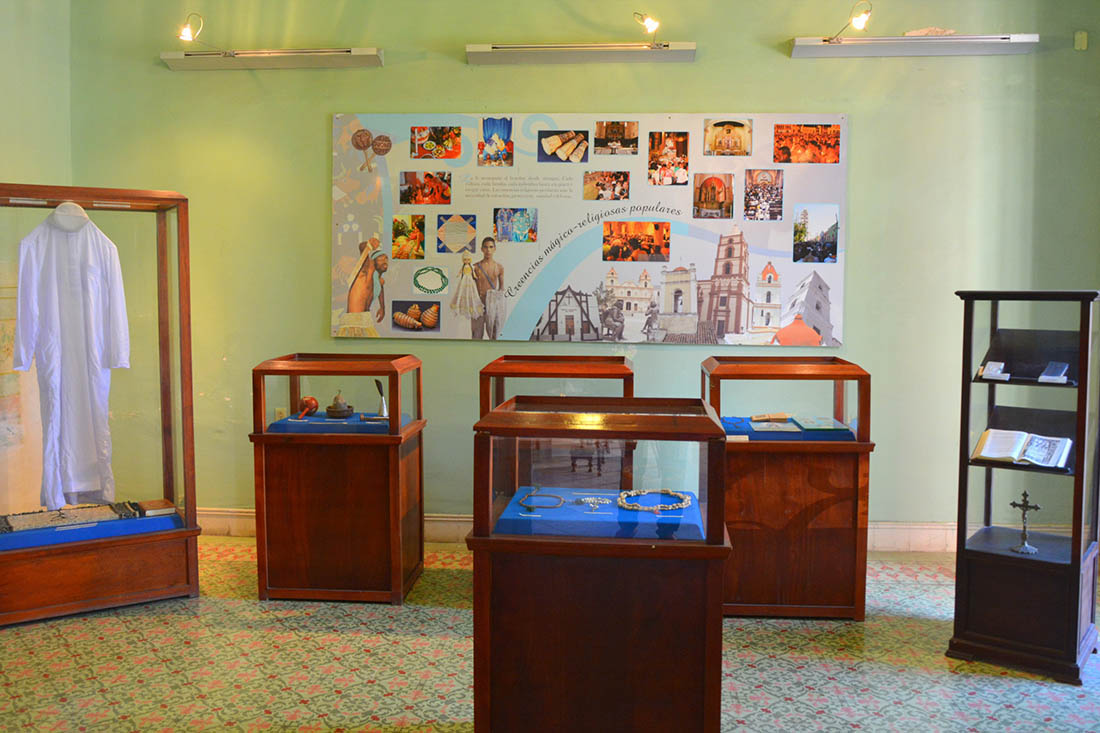
And if we speak of pure religions, there is too much mixture, because in a general sense the peaceful coexistence here of many manifestations means that as a concept we have a diverse and diffuse religion. Political will has made the free choice of creed and respect for its expressions a constitutional right in Cuba, a mestizo nation that for centuries saw its rich African heritage overshadowed. Today it is too common to see colorful beaded necklaces on people with different skin tones and social origins and folklore shows in all cultural spaces, something unthinkable decades ago, while the recent film “recomposes” the supposedly learned story of the shooting of the students of medicine in 1871, where the attempted rescue of the abakuás, a fraternity weighed down by the stigmas of ñañigismo and obscurantism, was never told.
On the other hand, to understand the State-Church relationship and separation, from the conflicts of the first years of the Revolution to the greater rapprochement with the visit in 1998 of Pope John Paul II, we could refer to the classic book by Frei Betto “Fidel and religion” and to the interview with Gianni Miná. Since the 1980’s, Cuban terms began to move from an atheist speech to a more inclusive and open secular one, which has become even more open to other foreign influences, since even Havana has a Russian Orthodox temple and has received patriarchs.

According to statistical data in Cuba, 86.85% of the population professes some belief, Catholicism being more than half of this index (largely due to the Spanish tradition, not forgetting the colonial past), but every day syncretism increases a little bit more, almost half of the polls.
At the local level
Camagüey, beyond being known as the City of Churches, for its large Catholic temples that rank squares and neighborhoods, is also a multifaceted city in beliefs: there is a Baptist temple on the same street as the cathedral and the also Catholic Our Lady of Solitude Church, a synagogue in the neighborhood of La Vigía, a mosque in a simple house in San Isidro Street, voodooism in the Cándido González district (not to forget the Haitian presence), houses of worship and even the practice of Buddhism. In such a diverse nation, the third Sunday of each January has special connotations.

Translated by: Aileen Álvarez García