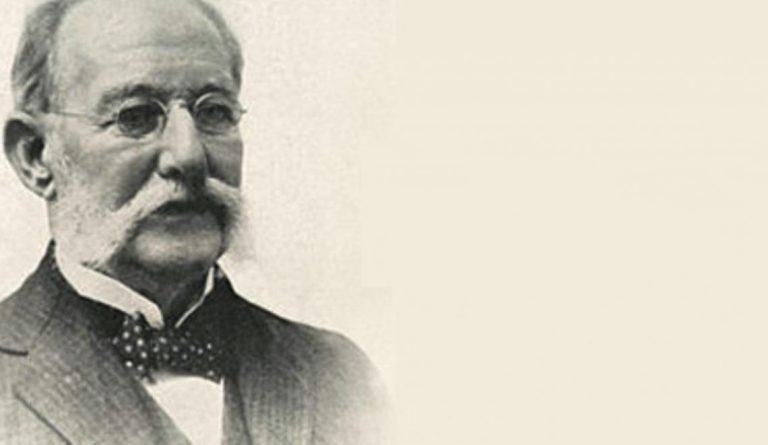
Carlos J Finlay is currently recognized among the most outstanding scientists of the 19th century; however, he faced dissimilar obstacles for his theory to achieve credibility despite showing convincing results from his incessant observations.
Its greatness does not consist only in having discovered with genius the transmitting agent of yellow fever and having issued its revolutionary scientific conception of contagion, but in the set of contributions to the ordering of medical sciences that were in transit towards a new century through the elaboration of a whole theoretical and practical body related to the aforesaid disease. A whole package of knowledge, techniques and applications related to epidemiology, pathogenesis, clinic, diagnosis, treatment and prevention.
More than a leading figure, a human being
Described as the perfect example of the beloved doctor, who united in his person a sharp mentality, untiring persistence, the greatest genius and charming demeanor. Of appreciable scientific simplicity and honesty. With great affection and devotion for the poor.
The weapon that he had to wield was as powerful as any other that could be wielded to save the lives of thousands of human beings, to raise the prestige of his country and that has served as an inspiration to Cuban hygienists in their current battle.
Carlos J. Finlay died at the age of 82 in Havana, on August 20th, 1915, due to heart syncope in an old house in the heart of Old Havana, where the Academy of Medical, Physical and Natural Sciences of Havana was established in 1868. Since 1960 it has been the “Carlos J Finlay” National Museum of Science History. His remains rest in the necropolis of Colón, in Havana.
By commemorating the 106th anniversary of his death, the people of Camagüey and especially his birthplace are working to materialize Finlay’s legacy.
Translated by: Aileen Álvarez García