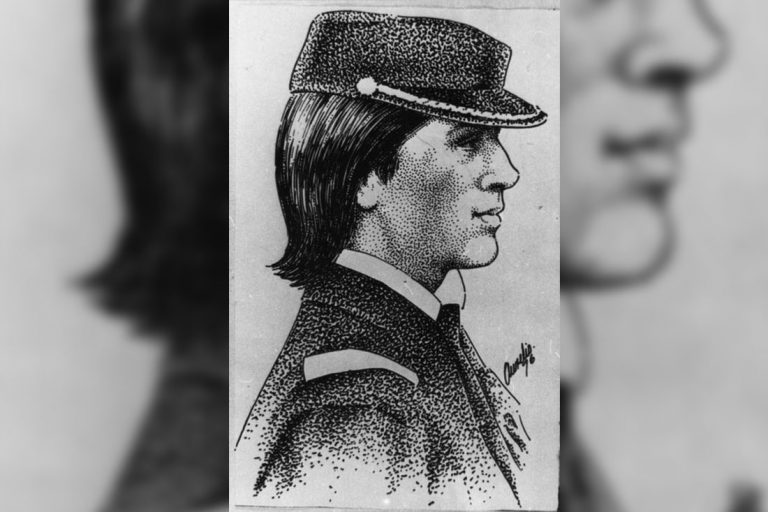
… “It impressed the shot to the temple, as a symbol of courage and military decorum, the shots of the failed execution in the rib cage, and the mark of many other bruises. But above all his leg, the broken leg, tied with leather and metal rods, which supported that new fighter of antiquity in his concept”.
With this description given by the historian Eusebio Leal about the figure of the prominent mambí, it can be said that he was a man who gave his short life to the struggle for liberation for both his country and ours.
About his origins
Henry Reeve was born and raised in Brooklyn (New York), on April 4th, 1850, his father was a Protestant clergyman named Alexander Reeve and his mother a humble woman, named Maddie Carrol; they were a respected, modest and hardworking family. Reeve with 15 years or less, was part of the Northern Army in the Civil War that took place in his country from 1861 to 1865 as a drummer. He acquired a good education and at the age of 19 he started working as a bookkeeper in a city bank.
At the end of the war in his country, Reeve came into contact with the Cubans who conspired in the United States of America for the liberation of Cuba from the Spanish colonialist oppression.
Convinced of the fairness of the Cuban cause, he enlisted in the Perrit steamer expedition, led by General Thomas Jordan. The first wound of the many that he received was in the combat that they waged against a Spanish column when they disembarked from the Perrit, in the Canalito estuary, Nipe Bay, Holguín province, on May 11th, 1869.
In action
He is taken prisoner days later along with other comrades and the group is given the death penalty by mass shooting. The bullet wounds that Reeve received during the execution were not fatal, so he managed to escape, wandering for 2 days where he was found by a group of patriots who led him to the El Mejías camp; there were the forces of the then Brigadier General Luis Figueredo.
He continues to fight as part of Jordan’s General Staff until he leaves for the United States, and he does so under the orders of Brigadier William O`Ryan, a Canadian who also gave his life for Cuba; Later he subordinated to Colonel Machado and after many adventures he managed to join the Camagüey cavalry under the orders of General Ignacio Agramonte, the Major, who soon became his trusted man and who called him Enrique the American, becoming chief of his famous cavalry.
Endowed Reeve with natural talent, lively, cunning, daring, brave even to the recklessness, it is natural that he made progress in the military career at the moment, distinguishing himself in a surprising way in many, many actions.
About other facts
In the action of La Soledad, his intrepidity was remarkable. He would also participate in the rescue of Brigadier General Julio Sanguily on October 8th, 1871, a fact that had an impact throughout the island for both the Cuban and Spanish sides, who had to change its entire strategy.
Before the end of 1871, the Englishman as he was known on the island participated in the battles of Plátano, La Redonda, San Ramón de Pacheco, Santa Deo, La Matilde and Sitio Potrero, in this last combat he was wounded again on 27th November 1871. Already on November 29th, 1872, during El Carmen combat, he received another wound in the abdomen, which forced him to rest for two months. He suffered from the aftermath of this injury until his death.
Reeve and Agramonte
Henry Reeve accompanied Agramonte in the combat of Jimaguayú on May 11th, 1873, where he died. On that occasion he took control of the division to hand it over to Sanguily eight days later. But in July 1873 he subordinated himself to the new Camagüey Chief, General Máximo Gómez, who on the 27th of that same month appointed Reeve as Chief of the 1st Division Cavalry.
After participating in the battles of Las Yeguas, La Luz and Atadeo, in the combat of Santa Cruz del Sur, on September 28th, 1873 when he faced a Spanish cannon that caused havoc on the Mambisa cavalry, he received serious injuries in a leg so he was transferred to the Sangre de Ciego de Najasa Hospital. After about 6 months of convalescence, he rejoins the ranks. Doctors putted a metal prosthesis to the affected limb, which had been shorter. A device also had to be created to hold it steady on his mount. Among the battles of 1876 are those of Aguacate, Guanal Grande and Río Hanabana, in this last combat, on July 25th, 1876 he was also wounded.
On the disastrous day of August 4th, 1876, in unequal combat, in the Sabana de Yaguarama, he was wounded in the chest and groin. Knocked off the horse, he receives another shoulder wound. However, he continues to fight until his strength and ammunition were out, he shot himself in the temple to avoid being taken prisoner, he was only 26 years old.
Translated by: Aileen Álvarez García