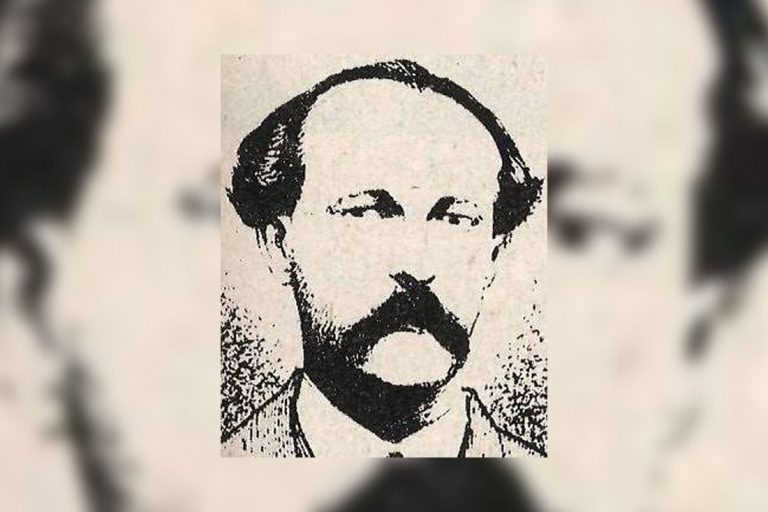
He was born in Puerto Principe on August 19th, 1820, his parents were Manuel Boza and María de la Cruz Agramonte. They belonged to the wealthiest group of families in the city and owned large pieces of land dedicated to livestock rearing.
He studied in his hometown, where he received the education that was imparted at the time. He married Elena Borrero Estrada, and his first son was named Virgilio.
The events of 1851 that culminated in the execution of Joaquín de Agüero and his companions, together with the repressive measures against the people of Camagüey subsequently adopted by the Spanish authorities; they increased their repudiation against the hostile regime, which by force tried to quell the Cubans’ desire for freedom.
Outstanding participation
The Revolutionary Board of Camagüey, founded in 1866, had Manuel Boza and his brothers Gerónimo, Gregorio among its members. All of them were working enthusiastically in the preparation of an uprising.
As soon as Carlos Manuel de Céspedes started the fight, on October 10th, 1868, the people of Camagüey prepared to support the movement started by the East side of the country.
On November 3rd of the same year in which a meeting was called at the Philharmonic Society in order to finalize the details of the uprising, Boza warned when he was summoned… “We will go to the Board to vote for the war, but take into account the gentlemen of the meeting, that if the Boza go out into the field, they will die rather than submit to the government they are going to fight “…
These words faithfully reflect his character and his firm decision to fight until victory or death.
The next day he participated in Las Clavellinas uprising, on November 4th, 1868, to speak out against the Spanish regime.
He had his baptism of fire in the combat of Bonilla, on the 28th of the same month, as a platoon leader. Due to the sympathy that characterized the Bozas, this quatrain was improvised for him, which said:
Dile que fueron los Boza
los que en el monte Bonilla
le cruzaron las costillas
al panzón de Valmaseda…
After the Assembly of Guáimaro, in April 1869, when the government of the Republic in Arms was constituted, he was appointed with the rank of colonel, head of the first brigade of the territory of Camagüey, with which he fought numerous combats, in the month of June, when Major General Federico F. Cavada Howard resigned.
Boza did not want to occupy that post; he recognized that he was not the ideal person to carry out a position that required extensive military knowledge. When his colleagues insisted that he accept, he said: “What am I going to do? If I do not accept, it will be worse for Camagüey.”
He held that position until the first days of 1871, in which Major General Ignacio Agramonte occupied the position, on January 17th, 1871, to remain second again.
On May 18th, 1871, in La Jagua, Manuel Boza Agramonte, a gallant figure in the independence struggle, fell victim to Spanish bullets; he was a man who offered to the country not only his large fortune, but his own life.
Translated by: Aileen Álvarez García