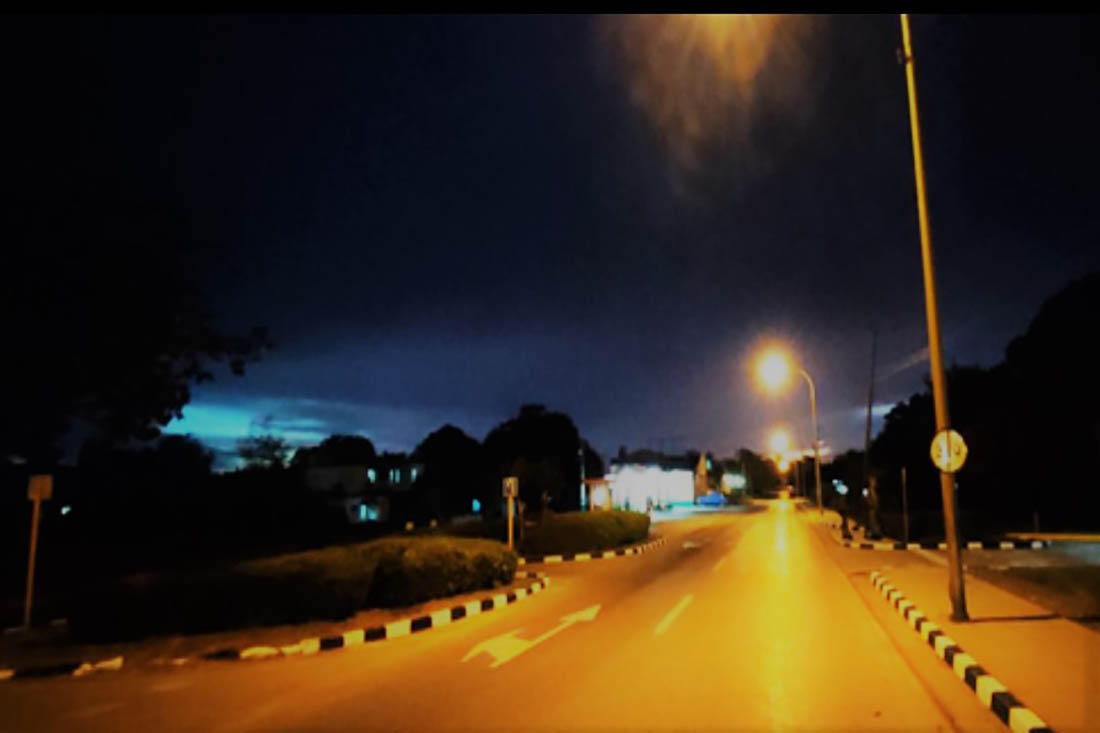
The automobile industry needed a road infrastructure; one of the first works started on May 20th, 1927 was the construction of the Central Highway, which was completed on February 24th, 1931. It should be noted as of great importance that the construction of the Central Highway throughout the country with a concrete base, was a great school, trained hundreds of foremen and thousands of workers in the dosage and use of this material.
Operators and mechanics of equipment such as bulldozers, excavators, motor graders, compressors, concrete mixers, drills and stone mills were also trained; in the same way, the taking of thousands of concrete specimens and the sampling and analysis of the physical, chemical and mechanical characteristics of rocks and sand, served to train personnel in laboratories and in quality control activities.
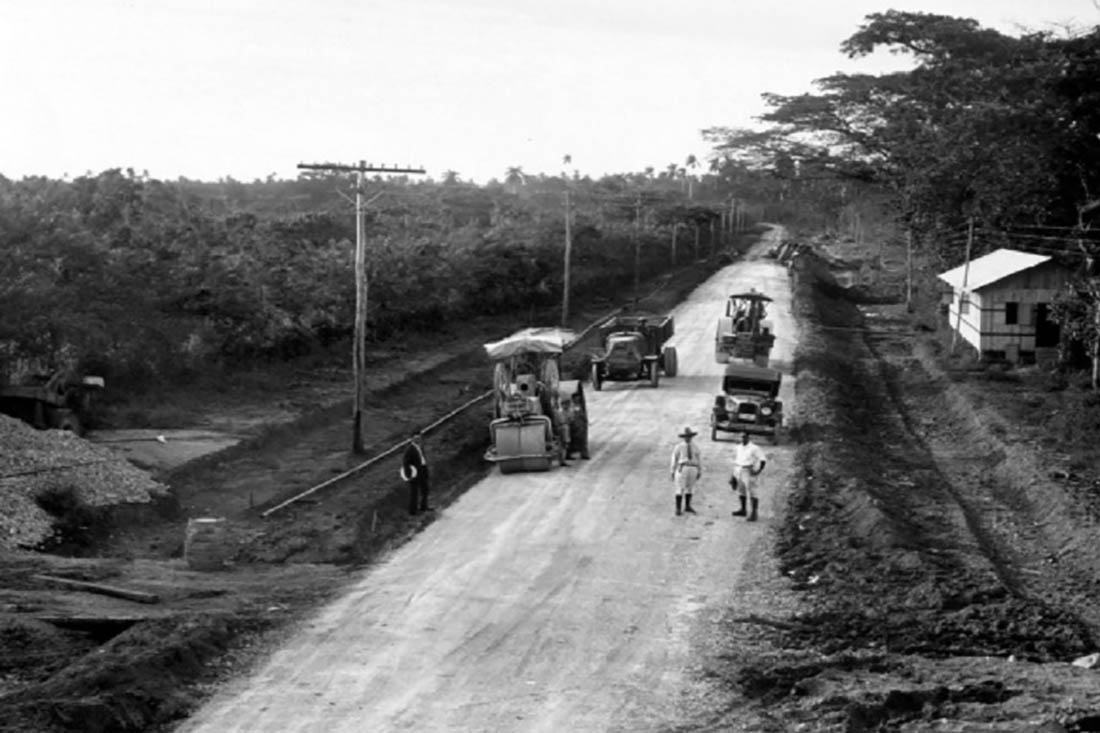
In general, this work served to prepare personnel throughout the Island in all construction activities. On July 15th, 1925, Congress approved the construction of the Central Highway, immediately beginning the field studies, and on September 27th, 1926, the first auction was held, attended by several national and foreign firms, but it was declared void because they were not in line with the interests of the state. The second auction was held on November 30th and the companies Compañía Cubana de Contratistas and Warren Brothers Company were the winners.
The Camino Real was a precedent
Mr. Juan de las Cuevas Toraya, in his book 500 años de construcciones en Cuba, pointed out: …As far as possible, the Highway followed the old layout of the Royal Roads and maintained the strip width of 20 meters, 25 yards , thereby minimizing expropriations.
In the Administrative and Descriptive Memory of the Works of the Central Highway, published in 1930 by the Bureau of Roads and Bridges of the Ministry of Public Works, it appears that one of the stone quarries used for the work of the Central Highway was Palo Seco in Guáimaro. , also used by the railways.
The National Capitol of Cuba marks its ground zero. On March 2nd, 1927, at kilometer 11 of the so-called Camino Real de Cuba, the works corresponding to the Camagüey province were inaugurated. It was distinguished by the innovative construction techniques used. In total, it has 1,732 new works, including 23 metal bridges.
Other contributions of Camagüey to the construction of the Central Highway
Camagüey: Although 44 quarries had been approved, most of the works were carried out with only 10. The sand from the riverbeds was generally of good quality. A plant was installed to classify gravel and sand from the Jatibonico River, although it was washed at a high cost due to contamination, the material was used.
The railway and the central highway, by connecting a series of towns —many of them until then isolated—, increased the traffic of travelers within the country and consequently hotels, so the Colón and the Plaza in Camagüey were built, among other hotels around the country.
Transcendence
It shortened distances, brought corners of the insular geography closer together, fostered human, social, scientific, cultural, political and economic development.
Bibliography
De las Cuevas, Juan (2001) 500 años de construcciones en Cuba, La Habana
Translated by: Aileen Álvarez García