In ancient history, the use of the shield played an essential role. In the old continent it was used fundamentally to distinguish the lineage of numerous families, from the nobility to the clergy. Its role was also decisive for nations, states and cities.
In 1508, Spain issued coats of arms to fourteen towns in Hispaniola. The advantages of such prebends were not exclusive privileges for the territories; it was a way of establishing recognition of Hispanic rights and power over the colonized regions.
The island of Cuba was granted several coats of arms legitimized by royal metropolitan certificates from the 16th to the 19th centuries. The first in 1516 -although there are criteria of some researchers who recognize the 1517 version- highlights in its design the Catholic images of the Virgin of the Assumption and Santiago Apóstol, patron of the Spanish monarchy.
Its handling was spread in particular by the colonial administration, on maps and in ornamentation.

On the other hand, it is necessary to ask if it was a concession due to certain submissive attitudes of the authorities and some inhabitants of the town or “singular merits that it has received at all times in the service of His Majesty and the Homeland.” Evidently, the Royal Decree itself states this, but an in-depth examination of the historical context requires paying attention to the nuances that this official document does not include.
It is important to pay attention to the demographic, urban, economic and cultural growth of Camagüey -a denomination that its inhabitants did not renounce-, the presence of the Royal Audience and the ideas of the Enlightenment, which offer more flexible overtones to understand why the natives of this land bet with a tremendous sense of identity on the formation of the Creole and national conscience.
Being a city implied denotative ranks within the Island, a superior order recognized from the metropolis, which, although it did not show decisive changes, was an undeniable fact within the framework of colonial authority.
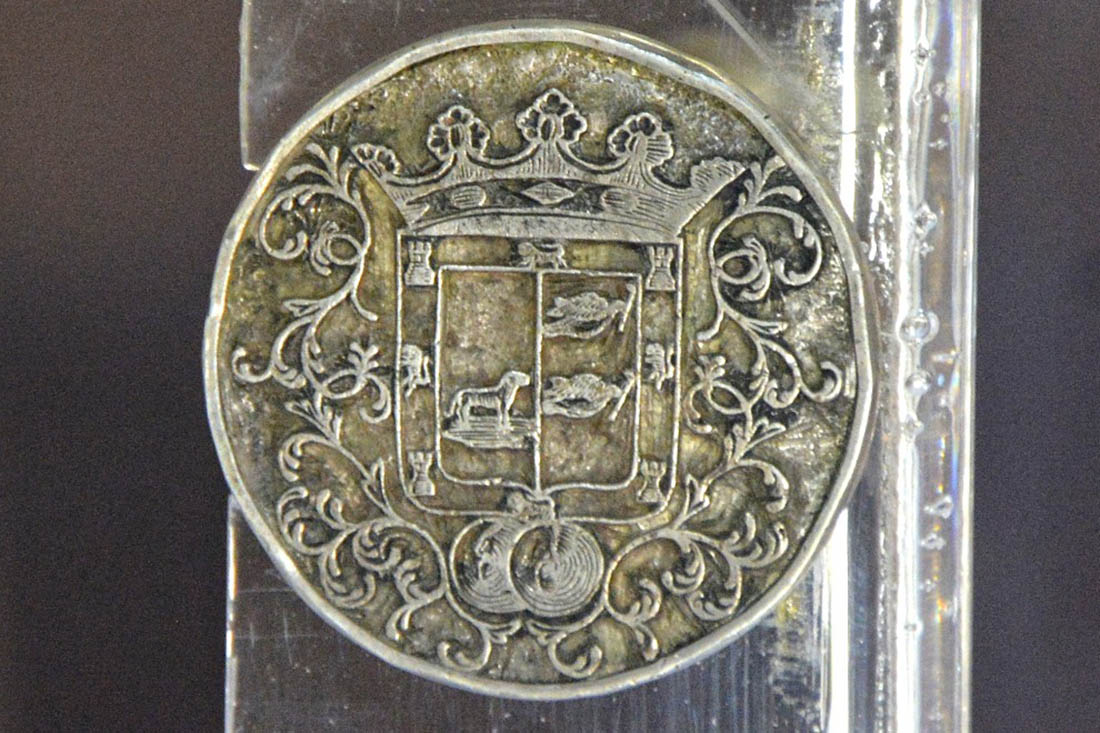
Today, 205 years after that event, the coat of arms and the ceremonial maces are part of the cultural imaginary of the people of Camagüey. Both patrimonial exponents are exhibited in the History Room of the Ignacio Agramonte Provincial Museum.
At the same time, for visiting passers-by or locals, enjoying the presence of the Coat of Arms of the City in the pedestrian Maceo street in front of the entrance of the Gran Hotel; or recognizing it in the urban furniture of the Gallo Square, on the facade of the Santa Cecilia Convention Center, and in other places in the Historic Center is a privilege.
Translated by: Aileen Álvarez García