One of the samples that refute the version that Camagüey is a “conservative” province, was the inauguration of the first radio station. An opportunity for the locals to learn about the national and international cultural events; and to relaunch on a larger scale the parnassus of the historic city, cradle of island literature.
Of the principeño cultural power
The visit made to the town of Puerto Príncipe by the governor of the Island, Don Miguel de Rojas, in the year 1532, revealed that in the town, in the middle of the network of original streets, the ruler had a seat in the house of one of the members of the oligarchy.
He had a good time because he was honored by “doñas” who then began to “talk”, there were offers of sweets. Years later, a poet from Gran Canaria, moved by the resistance made by a prelate to his Gallic kidnappers, would write the first literary work under the name Espejo de Paciencia.
More gatherings and discussions would follow, new string and wind instruments would be heard; the population would come out to swirl in a boisterous way between whites, blacks and Chinese in the celebration of San Juan; It would fill the Plaza de la Caridad with devotion and joy every September.
Culture woke up. And new proposals arose, and theaters, and high schools and societies…, and new life perfumed by the ancient aroma and by the contagion of the small motherland. The coastal Pueblo Viejo yielded to the Pueblo Nuevo, between the Hatibonico and Tínima rivers. The old routine of raising cows, at the same time broke with the routine of cultural and social stagnation.
Radio station in the new Camagüey
It is true that the radio movement in Cuba is closely linked to the former member of the Camagüeyan Liberation Army Luis Casas Romero (1882-1950). He was a band and orchestra director, an outstanding composer, and a “pioneer of Cuban radio.” Casas Romero is credited with operating a radio plant, with a “stable and systematic programming”, starting in August 1922.
On October 10th, 1922, the PWX, owned by the Cuban Telephone Company, was inaugurated in Havana, the first station in Cuban territory with characteristics of the so-called “Broadcasting” type, with studios, transmitters, equipment and professional personnel. That day, the first thing to be heard was the Cuban National Anthem, performed by the orchestra led by maestro Luis Casas Romero.
Meanwhile, in Camagüey, Pedro Nogueras Hernández, in his commercial establishment for the sale of electrical effects, located at Maceo street no. 1 corner of Plaza de la Soledad, sold radio parts and equipment, which aroused among the locals the pleasure of listening to concerts and musical auditions and other events generated in the country and in the United States.
Then, on October 28th, the engineer of the Westinghouse Electric International Company, Baltazar Moas, arrived in Camagüey, bringing with him a radiotelephone device to promote its sale. Meanwhile, on November 2nd, the merchant Francisco Lavernia Betancourt announced through a written note in the RADIOPHONE section of the newspaper El Camagüeyano, that several amateurs were experimenting with the new technology. One of them seemed to enjoy listening to the musical concerts broadcast from New York, New Jersey, Chicago and other North American cities.
Enthusiastic, the board of El Camagüeyano organized an audition in its workshops on Finlay street on the night of March 28th, 1823, leaving speakers placed on the balconies of the building to broadcast the auditions, which were heard by the public gathered in front of the building. According to the Havana radio station PWX, the Camagüeyan station became “one of the most powerful receiving stations in Cuba.”
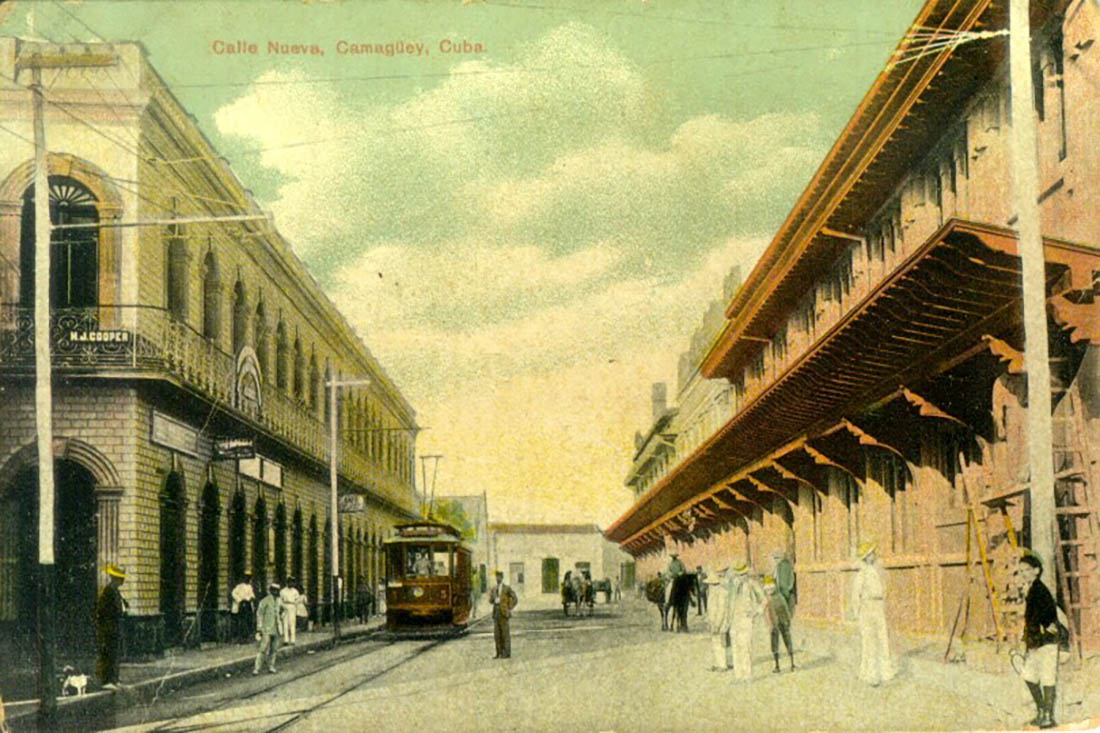
This success was followed by 7AZ, the first station in Camagüey. On December 4th, 1923, Pedro Nogueras obtained the license to set up his plant on the rooftop or roof garden of the Plaza Hotel, which faced the Railway Traveler Station.
Nogueras announced in El Camagüeyano, on January 12th, 1924: «The radio transmitting station will soon be inaugurated. It will be installed in the Hotel Plaza […]». The first official transmission occurred on January 16th, 1924. It was a technical event, as well as cultural and social relief. Camagüey broke with “conservatism” and routine.
According to the newspaper: «Tonight the 7AZ will be inaugurated. The magnificent radio transmitter station of the Plaza will officially operate». The inaugural program included the National Anthem by the Hotel Plaza orchestra, the speech by maestro Ángel Hernández Navarro, which was followed by a “Colombian musical corridor” and the Papá Montero danzón by the orchestra itself, among other activities.
As noted by the lawyer Antonio Bachiller y Morales in his Memories of my trip to Puerto Príncipe, in 1838: “the love of dancing is extraordinary”. And, hasn’t the 7AZ multiplied that hobby that continues to this day?
Translated by: Aileen Álvarez García