A few days after the glorious call of Carlos Manuel de Céspedes at La Demajagua sugar mill, the family of Mariana Grajales was placed in the vortex of the libertarian struggles. She is the mother and wife of a transgressive home, based on solid values of honesty, discipline, patriotism, loyalty, humanism, freedom, equality, neatness, family union.
When the forces of Captain Rondón arrived at the house of the Maceo-Grajales: “Mariana, overflowing with joy, enters her room, takes a crucifix that she had and says: on your knees all, father and children, before Christ, who was the first liberal man who came into the world, let us swear to liberate the country or die for it… and after this oath they abandoned everything they had and determinedly marched with the Liberation Army, Antonio, José, Miguel, Justo, Rafael, Felipe, Julio and Fermín, leaving the father, with eight-year-old Tomás and six-year-old Marcos, to hide the family in the mountains,” said Damaris A. Torres Elers, a doctor of Historical Sciences.
The Bronze Titan, in the 10 Years. Unscathed
As he did on many other occasions, Maceo recklessly placed himself in a dangerous position. This time luck failed him, and he was seriously injured. For some time it was thought that he would die. “This is huge incident,” Gómez wrote sadly in his diary, “which puts me in a more difficult situation, since there is no suitable Chief who can take charge of the fate Maceo leaves behind.” The North American researcher, Ph.D. in Philosophy, Philip S. Foner noted.
Pact or Independence
The intellectual Eduardo Torres-Cuevas refers that the Spaniards, aware of the crisis that was being confronted in the insurgent battlefield, highlighted the advantages of the pact. In mid-December 1877, the Government of the Republic in Arms convened a meeting where it was proposed to establish negotiations with General Martínez Campos. The House of Representatives repealed the Spotorno Decree that established the prohibition to enter into peace negotiations with the enemy.
Among the Bases of the pact it contained eight articles, among them stand out: the 1st article. refers: Concession to the Island of Cuba of the same political, organizational and administrative conditions enjoyed by the Island of Puerto Rico; the 2nd Forgetting the past regarding the political crimes committed from 1868 to the present and freedom of defendants who are serving sentences inside or outside the Island… the 3rd. Freedom for the Asian slaves and settlers who are in the insurgent ranks. the 6th The Capitulation of each force will take place in an uninhabited area where weapons and other effects of war will be deposited in advance.
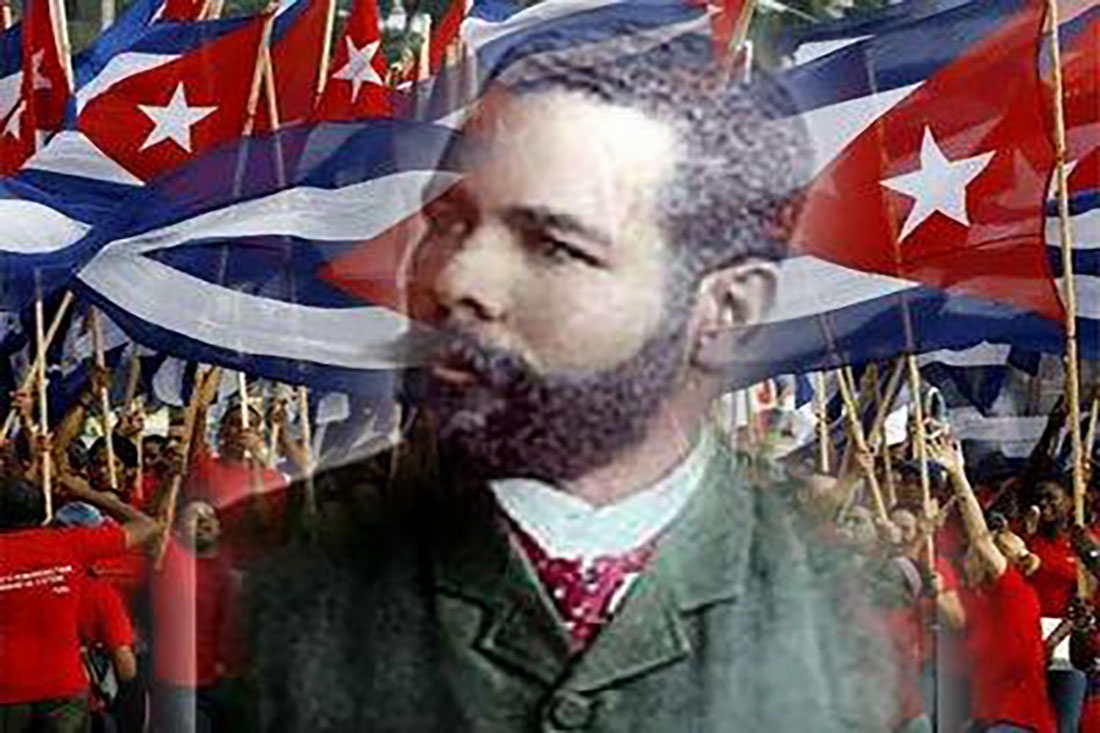
Maceo expressed total disagreement with what was signed. He supported the clarion call of the independence and abolitionist cry.
174 years after the Protest of Baraguá, March 15th, 1878
The moral position of Antonio Maceo Grajales is synthesized by the intellectual Cintio Vitier when he underlines:
“His refusal to accept the objective facts that seemed to definitively block the path to the Revolution, allowed him to open an airway to the homeland. All of Maceo’s fabulous military exploits pale before the sheer moral majesty of the Baraguá protest, an image nailed to the pride and hope of the people, the new founding of Cuba through an act of revolutionary faith, the conversion of fire into seed, a bridge over the void and into the unknown[…]”.
The revolutionary fraternity reigns cleanly over those who demand freedom without restrictions. This is how they surround Maceo: Calvar, Moncada, Los Figueredo ─ Félix and Fernando─, Crombet ─ Flor and Emilio ─, Rius Rivera, Rabí, Leyte Vidal, Quintín Banderas, Lacret, Martínez Freire, José Maceo, Feria, Cebreco, Silverio del Prado, Grave de Peralta, Santa Cruz Pacheco… the champions of an ideal resolved to save the tree of liberty in the land of all, pointed out the tireless researcher José Luciano Franco.
Transcendence of a thought
On September 5th, 1879, in the Proclamation “! Long live independent Cuba! Major General Antonio Maceo Grajales expressed:
“The key moment has come for us to let the whole world know that the Cuban knows how to die for the redemption of his homeland […]”.
Bibliography
Foner, Philip S. (2016) Antonio Maceo el Titán de Bronce. Editorial Oriente, Santiago de Cuba, Cuba.
Franco, José L. (1975) Antonio Maceo Apuntes para una historia de su vida. Tomo I. Editorial Ciencias Sociales, La Habana, Cuba.
Torres-Cuevas, Eduardo (2012) Antonio Maceo. Las ideas que sostienen el arma. Ediciones Imagen Contemporánea. La Habana, Cuba.
Torres, Damaris A. e Israel Escalona (2015) Mariana Grajales Cuello. Doscientos años en la historia y la memoria. Ediciones Santiago, Santiago de Cuba, Cuba.
Vitier, Cintio “Ese sol del mundo moral” Citado en Duany, Lídice (2008) “Antonio Maceo y José Martí, representantes del patriotismo revolucionario cubano en el siglo XIX” en De la Tribu heroica, Anuario del Centro de Estudios Antonio Maceo Grajales. Nos. 3-4, 2006-2007. Ediciones Santiago, Santiago de Cuba, Cuba.
Translated by: Aileen Álvarez García