Its origins go back to the “Victory Club” founded in 1893 in the bosom of Nueva Aurora by the mambises who went to the insurgent battlefield in the War of 1895.
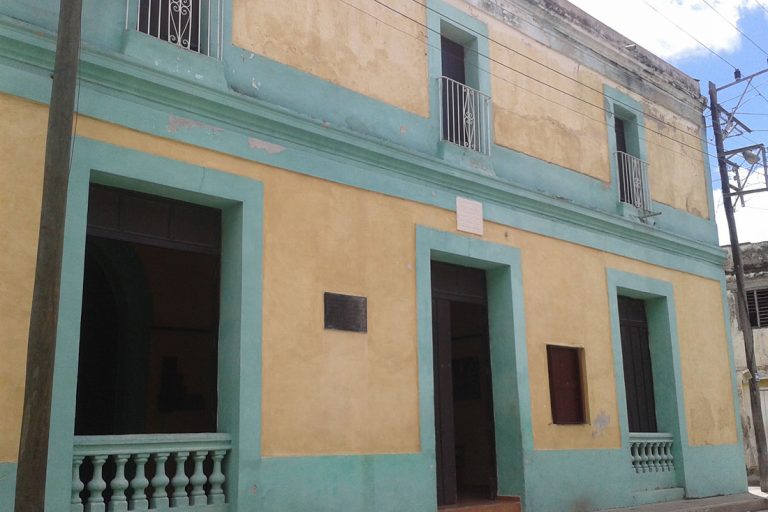
The first members of Victory met on Cristo Street on the corner of San Antonio Alley. President José Flores Adán, secretary: Celestino Betancourt, veterans of the War of Independence. Its origins go back to the “Victory Club” founded in 1893 in the bosom of Nueva Aurora by the mambises who went to the insurgent battlefield in the War of 1895. Later in 1907 the HQ were moved to Lugareño Street No. 29 corner to San Clemente with 125 founding members.
This was a site bought from the Mambi General Gustavo Caballero to carry out its activities in a place of their own. According to the regulations, the member had to be black, well-behaved and from a linage with the same qualities.
Women were admitted by being represented by a gentleman of the family and, in their absence, by a female head of the household. This last trait was distinctive and emancipatory for women, because almost all of them admitted women only as wives and unmarried daughters of an associate.
In 1925, the first National Workers Confederation was held in its premises, in its program, drawn up by Rubén Martínez Villena, the admission of black workers in all trades and departments of industries was requested.
The link with the struggles for social equality, workers, women, among other social aspects characterized Victory.
An avant-garde thinking
The avant-garde intellectuality was led by lawyers Armando Pla and Francisco Guillén Batista, —the latter highlighted the rejection that the man of color has been subjected to in our Homeland from the restoration of the Republic to the present—.
Dr. Leopoldo Cárdenas, representing the Revolutionary Guard, condemned the acts of exclusion in the Agramonte Park and also vowed that we unite and make the freedom and sovereignty of our Homeland a common cause. This shows the political reach of these collectivities for the vindication of the socially excluded.
Protests, petitions, social concerns were channeled with the founding of the Social Restoration Committee. Its leaders were an expression of the intellectuality linked to the revolutionary process.
Among them, Dr. Cruz Angulo Verdesi, Dr. Demetrio Carbonell Céspedes, the normal teacher Felicita Ortiz and Venancio Kaiser Arteaga as president.
There, laudable purposes were discussed to achieve a fair society, fighters were forged against successive dictatorships, some houses were searched for political evidence opposing the prevailing system.
The house San José No.265 between Jesús María and Rosario Street home of the then president of Victory, Juan Armando Villalón Vera was marked and searched due to the political conspiracies revealed by him.
The social scope of this association was transformed according to the ideas of social inclusion, which allowed to modify its regulations again in 1942. This behavior responded to a relation between the demands in the recently established Constitution and its social practices.
From 1961
In accordance with the demands of a revolutionary inclusive social project, Victory, in San Clemente on the corner of Lugareño Street, took up other social projects. Today it is the headquarters of the Puppet Theater for all children.
Translated by: Aileen Álvarez García